Story Practices Project Development Interactive Questionaire
A companion for shaping your story-work proposal
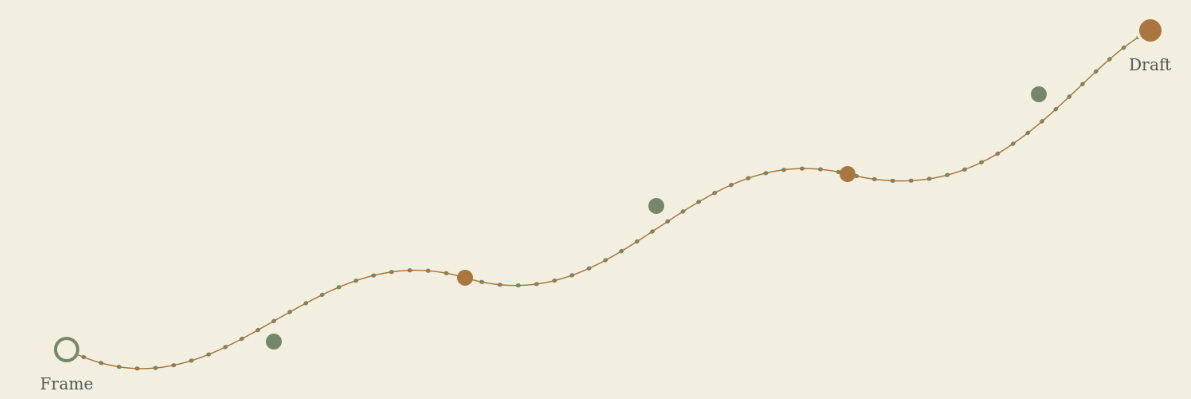
This tool is a guided conversation, not a form. It walks you through the questions that actually shape a strong story-work proposal — whether you're still figuring out what you're making, shaping something with partners, or ready to bring it to a funder or client.
It starts with one honest question: where are you right now?
If you're still clarifying the project for yourself, the tool stays reflective — no pitch language, no persuasion, just the questions worth sitting with. If you're shaping something with partners, it shifts to a shared voice, built for two or more people thinking out loud together. And if you're ready to seek funding or bring this to a client, it opens up the fuller path: positioning, scope, and a first draft shaped for that audience.
From there, it walks through the same territory every strong proposal has to cover, in plain language rather than grant-speak: What's the gap this addresses? Who's actually doing the work, and who does it reach beyond that? What access needs — language, disability, or otherwise — shape who can take part? And a question worth sitting with regardless of experience level: is this extending something you've already done, or is there real invention here?
If your project touches a specific field — humanities, community arts, oral history, public health, human rights, and others — the tool offers a short, honest translation: here's what a reviewer in this field is actually listening for, and here's the language that tends to land.
For anyone building toward funding, it also walks through the practical shape of the work — capacity building, follow-up support, distribution, consent — before helping assemble a first draft suited to exactly where you are: a private brief, a shared document for collaborators, or a proposal ready for a funder's eyes.
Nothing it produces is meant to be final. It's a thinking partner for the hardest part of proposal writing — getting clear on what you're actually making, and why — so that whatever you write next starts from solid ground.